For the last twenty years, we’ve figured out how to lead and minister to students in the age of social media. We’ve tweaked our teaching, learned to text instead of email, and stayed up to date about smartphones, platforms, filters, trends, and the nonstop reality of social media speaking into our students’ identities.
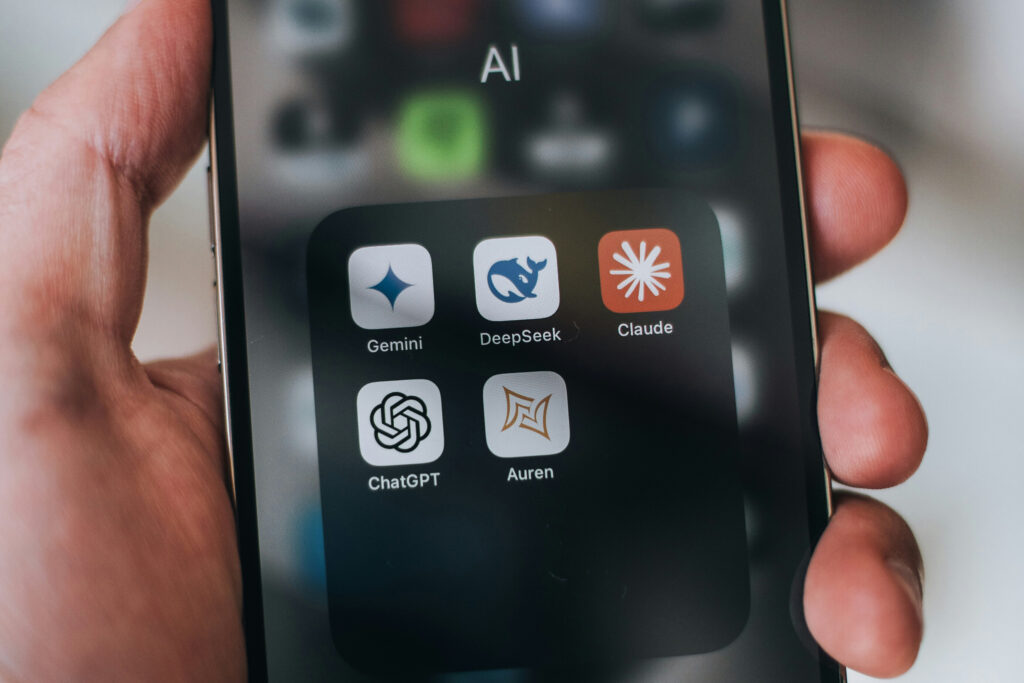
And when it felt like we finally figured out how to do youth ministry faithfully in a social media world, artificial intelligence showed up almost overnight.
Rather than students googling a question or scrolling through an Instagram feed, they are now interacting with technology that responds, adapts, and even feels conversational. AI is already shaping how teenagers learn, create, and process the world around them. It’s even being applied in the classroom as schools determine how to best integrate this new technology.
Just like almost every new technology introduced, feelings and opinions range from excitement and anticipation to dread and anxiety. That’s why this article is less about AI technology and more about the leadership moment we’re living in.
What does it mean to lead our students well as image bearers of God in a world filled with increasingly powerful tools? Before we decide how we should use AI in youth ministry, we need to ask the deeper question: Who are we forming students to become?
When we focus on what tools can do without anchoring ourselves and our students in who we are, we risk letting technology shape discipleship instead of letting the Gospel shape how we use technology. That’s why effective youth ministry leadership starts with biblical clarity about human identity.
Students are image bearers.
The Bible gives youth leaders something culture cannot: clarity about human identity. Genesis tells us that people alone are created in the imago Dei, the image of God.
So God created mankind in his own image, in the image of God he created them; male and female he created them. God blessed them and said to them, “Be fruitful and increase in number; fill the earth and subdue it. Rule over the fish in the sea and the birds in the sky and over every living creature that moves on the ground.”
We bear God’s image, not our creativity, productivity, or intelligence. This truth helps shape how we lead youth ministry. The teenagers in our youth groups are entrusted to our care. Rather than ministry outputs or problems to be managed, they are young men and women with dignity, value, and worth. They have moral responsibility and relational capacity. They are image bearers.
AI can do many things: generate content, simulate (and even stimulate) conversation, organize information, and assist with planning and communication. It cannot disciple a teenager into the image of Jesus Christ. Youth ministry will always be relational at its core. Gospel impact flows through trusted relationships, personal presence, and leaders who know their students. Tools and technology supplement and even enhance those efforts, but they cannot replace that.
At Dare 2 Share, this isn’t abstract theology. Our mission is relational at its core! We highly value our relationships with youth leaders, donors, and ministry partners. Technology can support that mission, but it can never replace what only people can do: be present, compassionate, faithful, and loving.
You are the youth leader, the leader of youth. And it is your responsibility to lead your students well.
AI is a tool:
Not a leader
Scripture already warns us not to confuse tools with authority. Isaiah compares a tool to the one who wields it and reminds us that the moral weight always rests with the person. Tools are not moral, people are.
Does the ax raise itself above the person who swings it, or the saw boast against the one who uses it? As if a rod were to wield the person who lifts it up, or a club brandish the one who is not wood!
AI works in the same way. It is a tool in the hand of its user. AI cannot bear moral responsibility. It does not carry discernment, nor does it possess wisdom. It cannot shepherd students. AI, being a tool, can help you brainstorm teaching ideas, organize communication, or save time on administrative tasks. But leadership, discernment, and shepherding belong to people called by God, shaped by Scripture, and guided by the Holy Spirit.
The danger isn’t that AI is powerful, but that leaders slowly outsource wisdom instead of sharpening it.
Not an idol
Romans 1 warns us about worshiping created things rather than the Creator. In youth ministry, this temptation often shows up subtly. We don’t literally bow down to tools, but sometimes we over use them and even trust them beyond what they are capable of doing.
They exchanged the truth about God for a lie, and worshiped and served created things rather than the Creator—who is forever praised. Amen.
Tools become idols when we trust them more than God or become more enamored with what they can do than how they should be stewarded. They take the wrong place in our ministry when they become the thing we are most excited about. And they become idols when efficiency matters more than faithfulness, speed replaces listening and discerning, and convenience replaces constant, abiding presence.
AI promises ease, but ministry formation requires intentionality. Students don’t just need answers, they need reliable adults who will walk with them through their questions and leaders who model a lived faith.
AI is not the end. It is a means. The mission has not changed: every teen, everywhere, hearing the Gospel from a friend. Any tool that serves that mission is useful. Any tool that replaces trust in God or diminishes human dignity is not.
To be stewarded
We are not called to fear tools but steward them wisely. Ecclesiastes reminds us that wisdom sharpens tools, so strength isn’t wasted. Proverbs teaches that tools, when used well, can increase fruitfulness.
If the ax is dull and its edge unsharpened, more strength is needed, but skill will bring success.
Where there are no oxen, the manger is empty, but from the strength of an ox come abundant harvests.
Throughout history, God’s people have embraced innovation to extend the reach of the Gospel:
- The printing press expanded access to Scripture.
- Radio and television amplified the proclamation of the Gospel.
- Digital platforms increased speed and reach even at a local church level.
AI is simply the next tool in that long story.
For youth leaders, the practical question becomes: How can this tool serve the discipleship of students without replacing what only humans can do? If AI saves time, youth leaders should ask how that time can be reinvested in prayer, outreach, and deeper presence with students, volunteers, and parents.
Leading Without Fear
Students are watching how we respond and use technology. If leaders react with fear, students learn anxiety. If leaders respond with uncritical enthusiasm, students learn confusion. But when leaders model thoughtful, Holy Spirit guided discernment, students learn wisdom.
Disciples are still made through relationships. Faith is still caught in proximity. And the Gospel still moves through people who love God deeply and love students passionately.
So we press on, leading without fear, without idolatry, and without surrendering what makes youth ministry powerful in the first place. We use tools wisely, steward our time intentionally, and stay anchored in the truth that students are not being formed by algorithms alone, but by the adults who walk with them.
The question isn’t whether AI will shape ministry. The question is how youth leaders will steward AI for the sake of the Gospel.
Team Discussion
Use these questions with your adult volunteers or Youth Ministry network to engage in conversation around the emergence of AI:
- Where do we feel the most pressure to keep up with technology in our ministry? How is that pressure shaping our decisions?
- In what ways could AI help us steward time more wisely, creating efficiencies without replacing relational discipleship?
- How can we intentionally reinvest time saved by technology into our relationships with our students?
- What guidelines do we need to ensure technology serves our mission versus reshaping it?
- How can we model discernment for students so they learn to use technology wisely?