“Something wicked this way comes.”
–from Shakespeare’s Macbeth
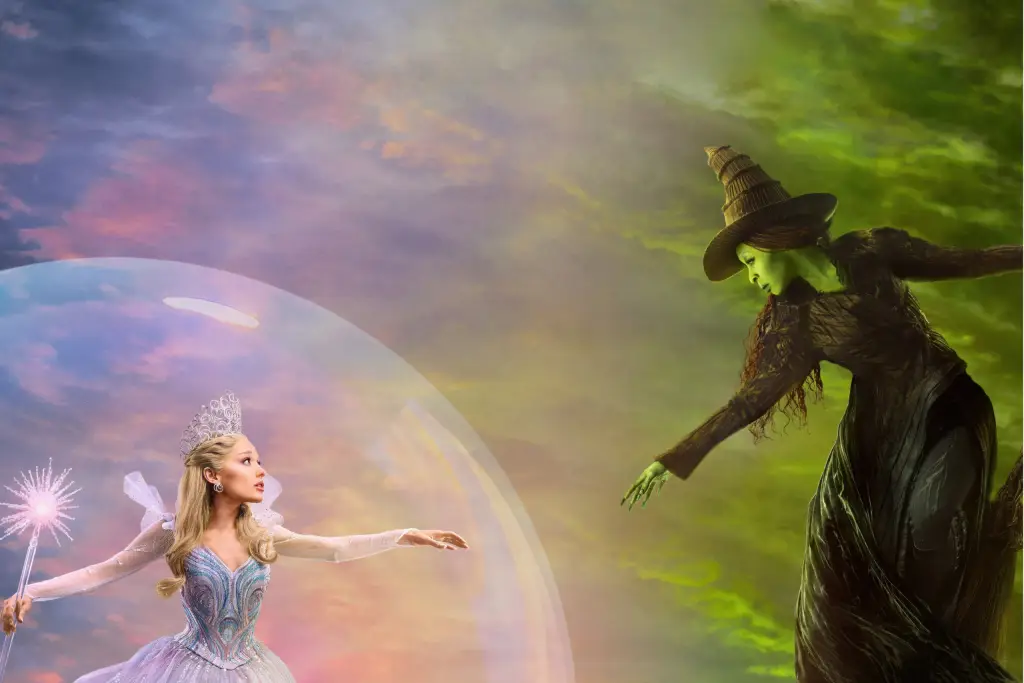
This week, that something wicked is Wicked: For Good, the second part in a film adaptation of the critically acclaimed Broadway musical. If your students are like mine, when Part One came out last year, they were singing Defying Gravity everywhere they went. Part One was a pop culture phenomenon, and Part Two looks to be just as culturally resonant.
The costumes, sets, and of course the music are a large part of Wicked’s draw, but what has given it staying power are some of the messages at its core. Wicked and Wicked: For Good are excellent opportunities to discuss with students the issues of evil versus good and truth versus deception.
Here are some ways you can encourage students to think about the Wicked movies, and how they can use them to initiate Gospel conversations.
All that is hidden
We live in a time when finding the truth is uniquely difficult. Social media and internet algorithms have made it easier for truth to be obscured. Students (and adults) often live within an echo chamber that feeds them “evidence” to support their previously held assumptions.
Likewise, the famous Wizard of Oz is known for his use of smoke and mirrors—all to keep you believing whatever he wants you to believe.
What makes him particularly devious in the Wicked films is his dishonesty: He lacks both magical abilities and leadership capabilities. And yet, he still rules Oz and calls himself “the Wizard,” refusing to acknowledge his shortcomings. He destroys the lives of countless people and talking animals to maintain his ruse. Everyone in Oz either buys into his lies or is hurt by his dishonesty, until it gets exposed.
This part of the story reflects what Jesus said to His disciples in Matthew:
‘So do not be afraid of them, for there is nothing concealed that will not be disclosed, or hidden that will not be made known.’ Matthew 10:26
Jesus says that anything that is concealed will be laid bare. All our sins, all our dishonesty, all the people who we’ve hurt, will one day be revealed for all to see.
If we say we have no sin, we deceive ourselves, and the truth is not in us. If we confess our sins, He is faithful and just to forgive us our sins and to cleanse us from all unrighteousness. If we say we have not sinned, we make Him a liar, and His word is not in us. 1 John 1:8-10
A peek behind the curtain
“Pay no attention to the man behind the curtain” is what the Wizard proclaims just before Dorothy reveals his true nature.
We often respond to our sin in the same fashion: “Lord, pay no attention to the sins behind the curtain.” We’re afraid God will reject us if we reveal our faults. We think we might use up what remains of God’s grace and mercy.
But Jesus reveals in John that “the truth will set you free” (John 8:32).
To experience true spiritual freedom, we must be honest about our sins, and we should encourage our students to do the same. When we confess our sins, even after the initial point of salvation, we will experience the healing power of the Holy Spirit.
Therefore confess your sins to each other and pray for each other so that you may be healed. The prayer of a righteous person is powerful and effective. James 5:16
Foolish things to shame the wise
While we can experience the freedom of truth individually, we should also seek truth in our communities. But seeking to promote truth is not easy.
Throughout the Wicked movies, Elphaba—the “Wicked Witch of the West”—tries to expose the Wizard’s dishonesty. But the people around her refuse to listen. The truth is too hard, too discouraging, too difficult for them to accept. She is ultimately cast as a villain because of her dedication to the truth.
‘Blessed are those who are persecuted because of righteousness, for theirs is the kingdom of Heaven.
‘Blessed are you when people insult you, persecute you, and falsely say all kinds of evil against you because of me. Rejoice and be glad, because great is your reward in Heaven, for in the same way they persecuted the prophets who were before you.’ Matthew 5:10-12
If we take a stand for truth, we will be persecuted. When we encourage students to stand for truth, they may lose friendships, social status, or relationships. When they are persecuted for sharing the truth of the Gospel, we should teach them to rejoice and be glad in their suffering. The world may see them as obnoxious or even villainous, but God sees their hearts and their dedication to the Gospel.
Because of Elphaba’s social standing, the people around her refused to take her seriously. No good can come from a woman with green skin dressed in black, they think. But even though the people of Oz see Elphaba as foolish, she is the only one who sees the truth for what it is.
But God chose the foolish things of the world to shame the wise; God chose the weak things of the world to shame the strong. God chose the lowly things of this world and the despised things—and the things that are not—to nullify the things that are, so that no one may boast before Him. 1 Corinthians 1:27-29
People look at students and think: Teenagers are foolish, weak, and powerless. What good can they do? But we Gospel Advancing leaders know better. We know that students are uniquely positioned to bring the Gospel to those around them, in the same way Elphaba brought truth to those who overlooked her, .
Throughout Church history, God has used teenagers to shame the wise and reveal the Gospel. And today, that teen movement continues to grow.
Wickedness uncovered
The happy ending to Wicked comes about when evil is exposed and truth is revealed. Only then is the land of Oz healed.
As believers, we too have a day to look forward to, when all wickedness is uncovered and all wrongs are made right.
‘It is done. I am the Alpha and the Omega, the Beginning and the End. To the thirsty I will give water without cost from the spring of the water of life. Those who are victorious will inherit all this, and I will be their God and they will be my children. But the cowardly, the unbelieving, the vile, the murderers, the sexually immoral, those who practice magic arts, the idolaters and all liars—they will be consigned to the fiery lake of burning sulfur. This is the second death.’ Revelation 21:6-8
The Day of Judgement is drawing near. And when that day comes, everything that is behind the curtain will be revealed. At that point, the only thing that will matter is whether we trust in Jesus or not.
But Judgment Day isn’t here yet. People still have time to make a better choice than the one the Wizard of Oz made. They can confess their sins, turn to Jesus, and be saved.
Wicked gives us a fictional depiction of what unconfessed sin can do to our lives and communities, and the destruction it brings when left unconfessed.
As your students discuss the two films with their family and friends in the coming months, encourage them to bring up these themes and use them as a segue to share the G.O.S.P.E.L. acrostic. They can admit their own sinfulness and need for a Savior, and offer others an opportunity to do the same.