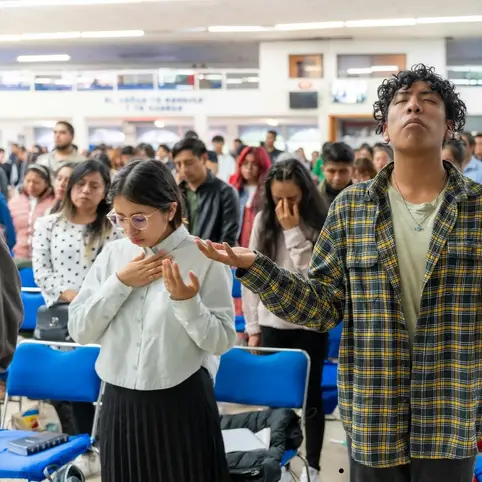
Every youth ministry tells a story. Some are alive with prayer, passion, and purpose. Others look busy on the surface but lack spiritual depth. The difference rarely comes down to the latest series, social media strategy, or retreat theme. It comes down to culture.
Before identifying where your group stands, explore what defines a healthy foundation in How to Build a Healthy Youth Ministry Culture That Advances the Gospel.

1. Prayer Fuels Everything
Every Gospel Advancing ministry begins with prayer. Jesus modeled this when He “often withdrew to lonely places and prayed” (Luke 5:16). Before choosing the disciples, before performing miracles, before facing the cross, He prayed.
A healthy ministry culture follows His lead. Prayer is not filler between songs or small group transitions. It is the foundation for everything else.
When leaders pray by name for students and when students pray for friends who do not yet know Jesus, culture begins to shift. The focus moves from entertainment to dependence on the Holy Spirit. Walls come down. Hearts soften.
As unity grows, leaders gain direction, and students begin to expect God to move. That expectation is the heartbeat of spiritual health.
If prayer is the fuel, mission is the engine. Without prayer, your ministry may run for a while, but it will not go far.
2. The Gospel Stays Central
Paul reminded the church in Corinth, “For what I received I passed on to you as of first importance: that Christ died for our sins… that He was buried, that He was raised on the third day” (1 Corinthians 15:3–4). The Gospel is not one topic among many; it is the topic.
In a healthy youth ministry, everything connects back to that Good News. Worship sets reflect gratitude for it. Lessons point students toward it. Conversations circle back to grace, redemption, and purpose.
When the Gospel stays central, clarity replaces confusion. Students stop viewing faith as behavior management and start seeing it as transformation. Leaders find freedom from performance-based ministry. The group begins measuring success not by attendance but by the number of Gospel conversations and changed lives.
Keep Jesus at the center, and everything else finds its right place.
3. Leaders Model What They Teach
“Follow my example, as I follow the example of Christ,” Paul wrote in 1 Corinthians 11:1. That is not arrogance; that is leadership.
Students learn by imitation. They absorb your priorities and reflect your example. When leaders share their faith stories, admit struggles, and show how they live for Christ in the real world, students learn that the Gospel is not theory. It is life.
Healthy youth ministry leadership is authentic, not polished. Students do not need perfect leaders; they need faithful ones. They need to see their pastor pray with a friend, apologize when wrong, and live generously.
Modeling the mission matters more than any message you preach. The next generation will always mirror the one leading them.
We explore how to live that out practically in How Youth Leaders Can Model a Healthy Culture.

4. Students Take Ownership
The Great Commission was not given to adults only. Jesus’ call to “go and make disciples” (Matthew 28:19) includes every believer, including the teenagers in your youth room.
In healthy ministry cultures, something powerful starts to happen. Students no longer wait for adults to tell them what to do. They begin taking initiative, praying for their friends, serving others, and starting Gospel conversations because they want to, not because someone assigned it.
Ownership happens when leaders hand over responsibility. Let students lead prayer times, organize service projects, or plan outreach nights. It might feel risky, but that is how they learn to lead. The moments of letting go become the moments of growth.
A culture of ownership produces maturity. Students move from consumers to contributors, from attendees to ambassadors. That shift can ignite revival in your community.
5. Discipleship Is Personal and Reproducible
Jesus never built a program; He built people. He called twelve to follow Him and invested deeply in them. Mark 3:14 says, “He appointed twelve that they might be with Him and that He might send them out to preach.”
Healthy youth ministries follow that same rhythm: be with and send out.
Discipleship is personal. It happens over meals, through text messages, and in car rides home. It is intentional but not complicated. A conversation about faith after a softball game or a check-in before school can mean more than a year’s worth of sermons.
When students experience relational discipleship, they naturally reproduce it. They know what it feels like to be invested in, so they start investing in others. That is how multiplication happens, not through curriculum alone but through connection.
6. Evangelism Is Celebrated
In Luke 15, Jesus described a shepherd leaving ninety-nine sheep to find the one that was lost. When he found it, “he joyfully put it on his shoulders” and called his friends to celebrate (v. 5–6). Heaven throws a party when one sinner repents, and so should we.
If your youth ministry celebrates only attendance or big events, that is what students will chase. But when you celebrate stories of faith-sharing, courage, and compassion, evangelism becomes normal.
Each story matters. Highlight a student who prayed with a friend. Share how a small group served someone in need. Those moments teach students that success in ministry is not about numbers; it is about obedience.
When evangelism becomes celebration-worthy, students discover the joy of living on mission.
7. Transformation Is Measured, Not Activity
Romans 12:2 tells us, “Do not conform to the pattern of this world, but be transformed by the renewing of your mind.” Transformation, not busyness, is the true sign of health.
Too many ministries measure success by attendance or energy. But spiritual impact cannot be captured in headcounts. Healthy cultures focus on heart change, the kind that shows up in habits, compassion, and courage.
Ask yourself: Is your group growing with new believers? Are students learning to share their faith? Are they showing fruits of the Spirit? Are families noticing change at home? Do they respond differently to conflict, temptation, or pressure than they did six months ago? Are they growing in compassion, consistency, and courage when it comes to living out their faith?
These are the signs of true transformation, the kind that cannot be manufactured only through events or energy. It is the work of the Holy Spirit producing lasting change from the inside out.
When transformation becomes your measure, your ministry gains depth and endurance. It stops chasing trends and starts reflecting the timeless work of the Holy Spirit.
Building on These Marks
No ministry has all seven marks perfected. Every culture is a work in progress. The healthiest leaders are those who regularly ask, “Where are we growing? Where are we drifting?” and then adjust accordingly.
The goal is not perfection; it is alignment with Jesus’ mission. If you see gaps, start small. Pray for renewal. Realign your focus. Model what you want to multiply.
Ready to Build a Culture That Lasts?
Healthy youth ministry culture does not happen by accident. It grows through prayer, consistent leadership, and Gospel focus. When you anchor your ministry to the Word of God and the mission of Jesus, growth follows naturally.
If you want your group to thrive, start here: one mark, one prayer, one student at a time.