
If you have been exploring what true ministry multiplication looks like in a youth ministry, our full guide on ministry multiplication shows that students are not just part of the mission. They are the drivers of it. This is the heart of a Gospel Advancing approach, a philosophy that equips and mobilizes students to actively share the Gospel and make disciples in their everyday relationships. Nowhere is that more evident than in student-led evangelism.
Student-led evangelism is not a bonus strategy. It is the engine of Gospel Advancing movement.
Jesus highlighted this principle when He told His followers, “You are the light of the world” (Matthew 5:14). He did not position them behind Him as spectators. He sent them ahead as witnesses. Youth ministries that cultivate this mindset see movement that cannot be manufactured through programs alone.
Students Reach People Adults Cannot Reach
Teenagers live in relational ecosystems their leaders simply cannot access. Classrooms, sports teams, group chats, lunch tables, gaming circles, after-school hangouts, locker rooms, and online spaces. Each setting is a mission field with dozens of Gospel opportunities that adults will never step into.
When students understand that God has placed them in these circles with purpose, they begin seeing everyday moments differently. A friend who is discouraged becomes someone to pray for. A teammate struggling with identity becomes someone to encourage. A classmate asking deeper questions becomes someone to share the hope of Christ with.
This is multiplication at its most natural level.
Evangelism Deepens Discipleship
One of the greatest misconceptions in youth ministry is that evangelism should wait until a student is “spiritually ready.” Scripture presents a very different pattern.
In John 4, the Samaritan woman meets Jesus, believes, and immediately goes into the city telling others about Him. Her testimony draws people straight to Jesus before she has any theological training.
Evangelism is not the end result of maturity. Evangelism accelerates maturity.
Students who share their faith begin:
- Studying Scripture with more focus
- Praying with greater urgency
- Asking deeper questions
- Leaning on leaders for guidance
- Reflecting more honestly on their own spiritual growth
Evangelism is discipleship in motion.
Gospel Conversations Create Visible Ministry Momentum
Momentum in a youth ministry is rarely built on events. It is built on stories.
- A student shares how they talked about Jesus with a friend during practice
- Another celebrates that someone accepted an invitation to youth group
- Someone else describes a conversation that opened a door for prayer
These moments foster a culture where sharing the Gospel becomes normal rather than exceptional.
When Gospel conversations become common, the ministry feels alive. Students notice it, new believers feel it, and leaders witness movement they did not initiate.
This is the kind of momentum that does not fade when the calendar slows down.
Evangelism Unlocks Multiplication Because It Cannot Stay With One Person
When one student shares the Gospel, they create ripples. When multiple students share the Gospel, they create waves. Multiplication happens because the Gospel compels people to reach others.
Paul captures this reality in Romans 10:14 when he writes, “How can they believe in the one of whom they have not heard?” Students quickly realize that someone else’s salvation story might trace back to their willingness to speak.
Evangelism is the spark. Multiplication is the flame that follows.
Student-Led Evangelism Requires Leader Modeling, Not Leader Control
A multiplying ministry does not ask students to do something leaders are unwilling to do. Students follow authenticity more than instruction.
When leaders share real examples of Gospel conversations from their own week, students see the mission modeled in a tangible way. When leaders pray for people by name, students understand how personal evangelism becomes. When leaders share their fears or challenges in evangelism, students feel permission to try rather than fear failure.
Leaders do not have to control evangelism to shape it. They simply need to model it and equip students to practice it.
Your Students Are Ready for More Than You Think
Youth leaders often underestimate how boldly teenagers can live for Christ when they understand the mission. Students are spiritually curious, socially connected, passionate, and positioned in one of the most active relational seasons of their life.
When they realize God intends to use them right now, everything changes.
They stop waiting for “someday.” They start living as missionaries today.
And that shift opens the door to multiplication you could never produce alone.
Give Students an Environment Where Evangelism Comes Alive
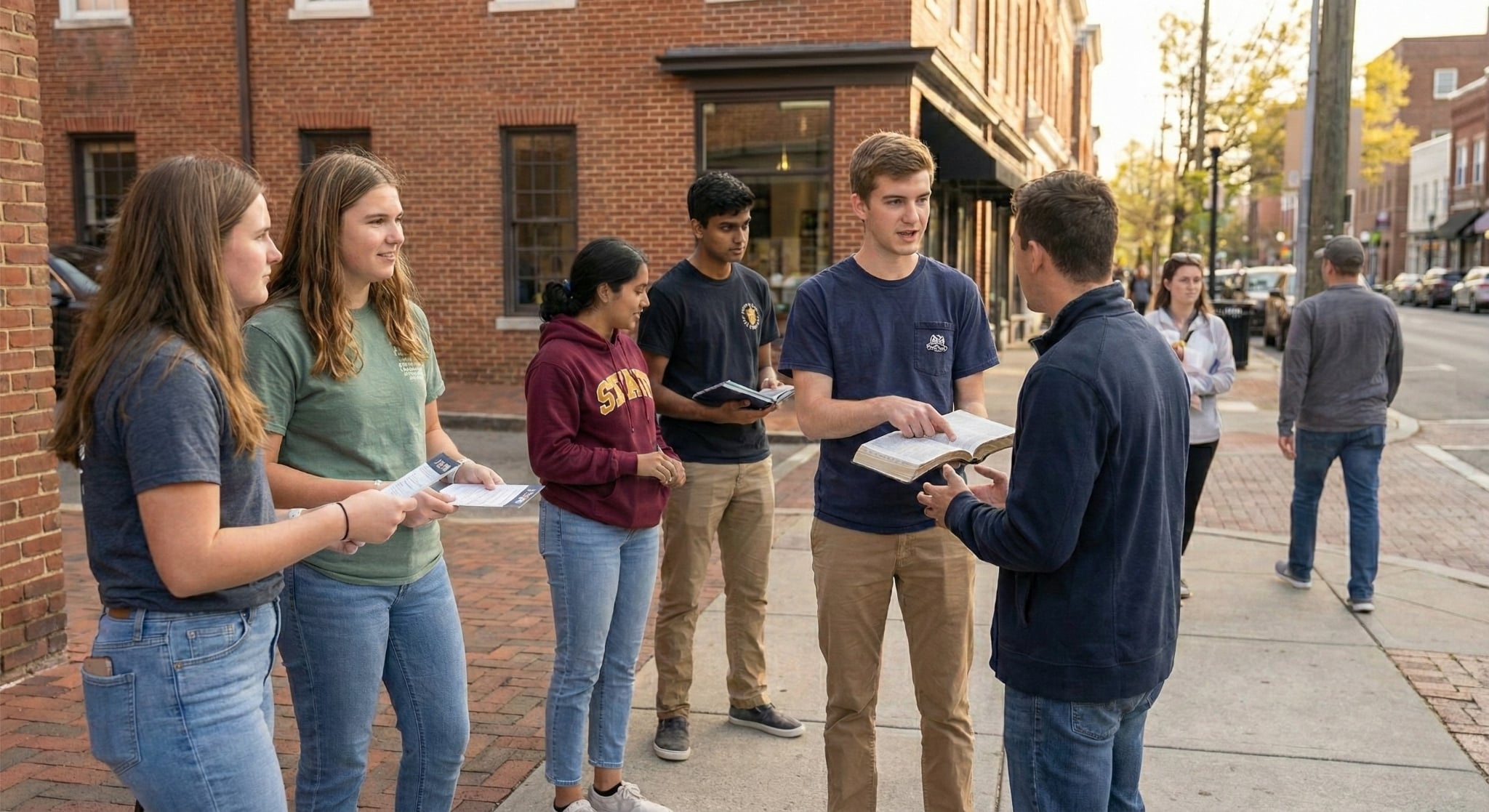
Student-led movement often begins when teenagers experience evangelism in a safe, intentional, Spirit-led environment. They need to see it modeled, practice it with guidance, and gain confidence through real conversations.
That is why Lead THE Cause is so catalytic.
At LTC, students:
- Learn clear and simple ways to communicate the Gospel
- Pray passionately for friends who need Jesus
- Engage in real evangelistic experiences
- Grow in ownership as disciple makers
- Build an action plan with their leaders for movement back home
If you want to accelerate student-led evangelism and ministry multiplication, this is one of the most effective steps you can take.